Can a trust mark keep your face out of AI? UnitedUs thinks so with its rebrand for Twinnin
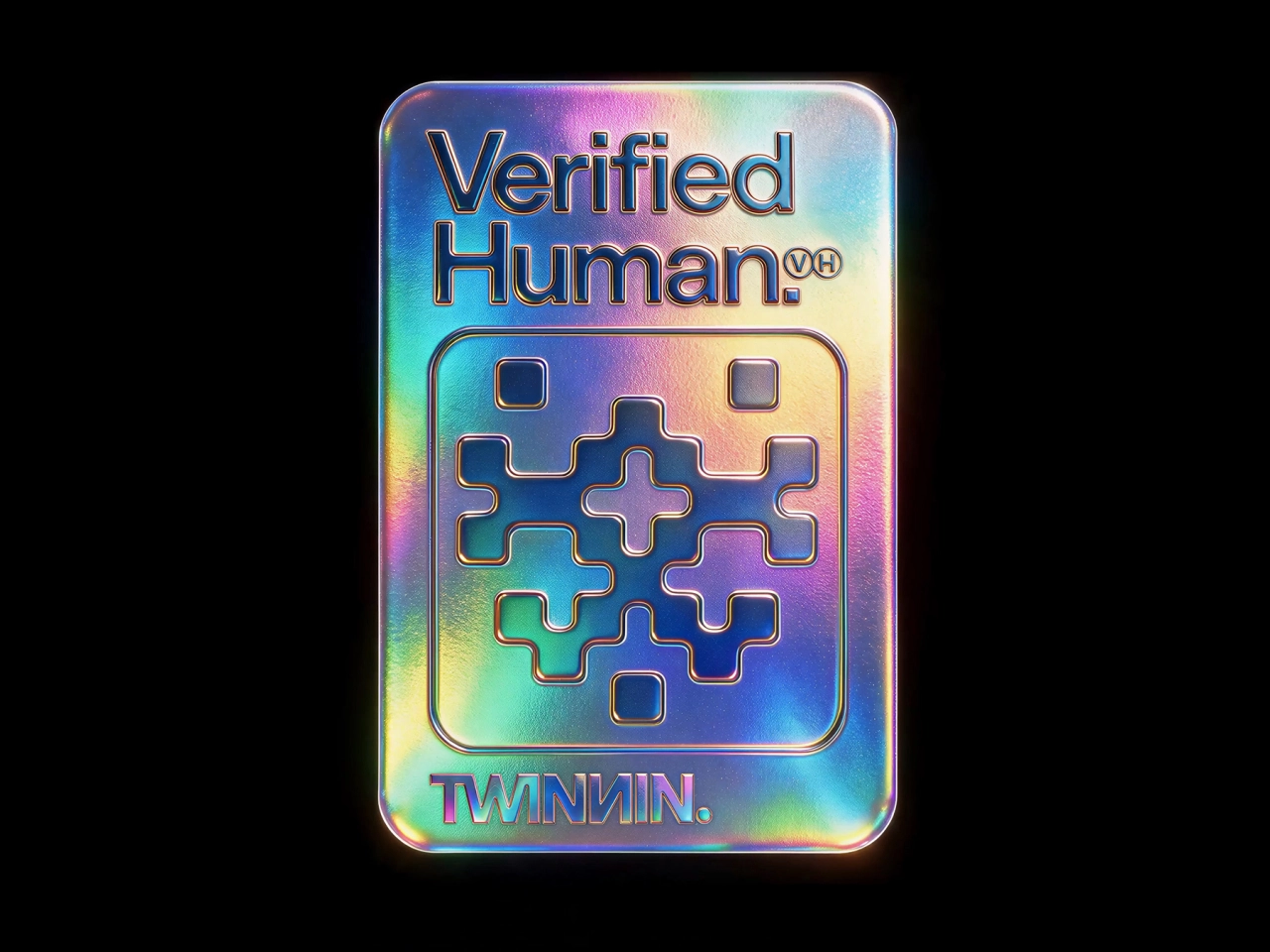
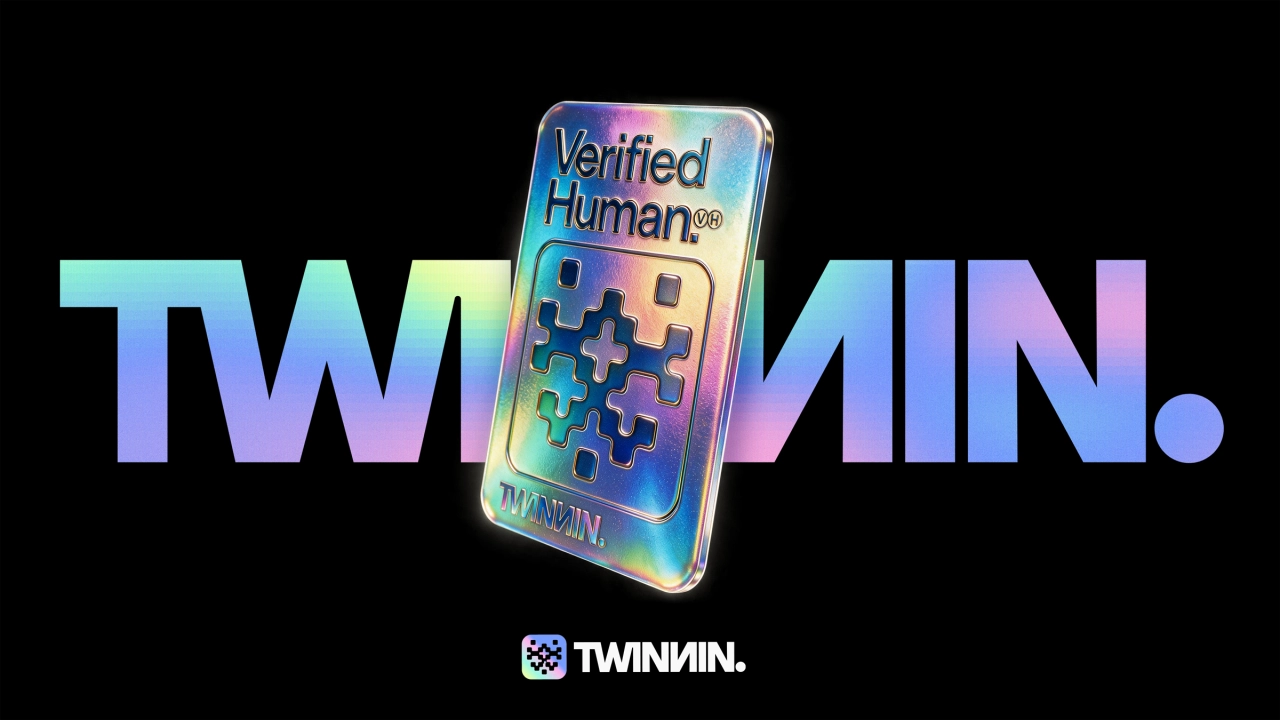
The Brighton studio has crafted an identity centred around a 'Verified Human' mark. And it looks very much like a security hologram. The idea is you instantly know a real human gave their permission.
About 18 months ago, my husband Tom showed me something that freaked me out. He took six seconds of my voice from The Creative Boom Podcast and fed it into an AI voice tool. What came out was terrifying. It wasn't quite "me", but it would've fooled, say, my mother if it was used on a scam phone call.
So when I opened an email this morning about a platform built to give us control over how AI uses our likeness, I realised I'd been worried about this issue for some time. It's really concerning that anyone can mimic us without our consent. I never thought I'd live to see the day that we'd have to become... verified as humans, for goodness sake. But here we are. Twinnin, co-founded by Katrien Grobler and William Haakon Berg, is a consent, licensing and provenance registry for the human face. Yes, really. In plain English, it means you prove you're a real person, then you decide what happens next. License your face to brands, broadcasters and AI labs and get paid every time it's used... or defend it and keep it out of AI altogether. It's your choice.
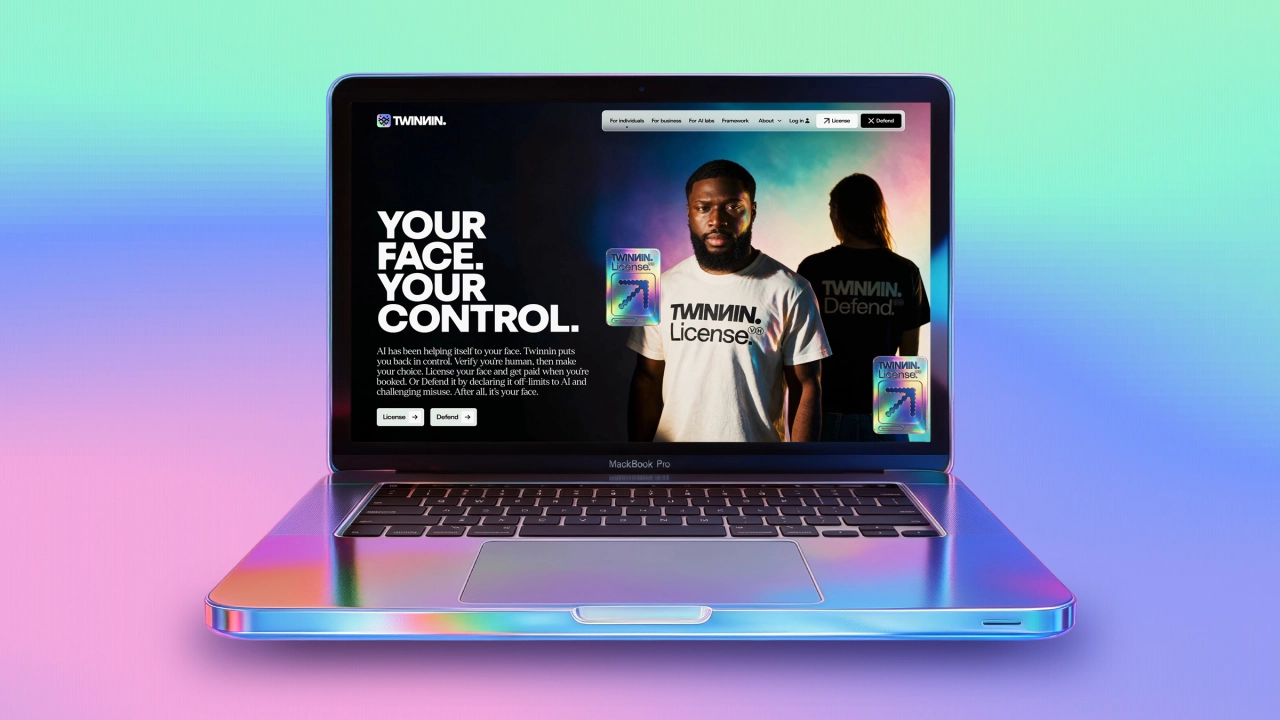
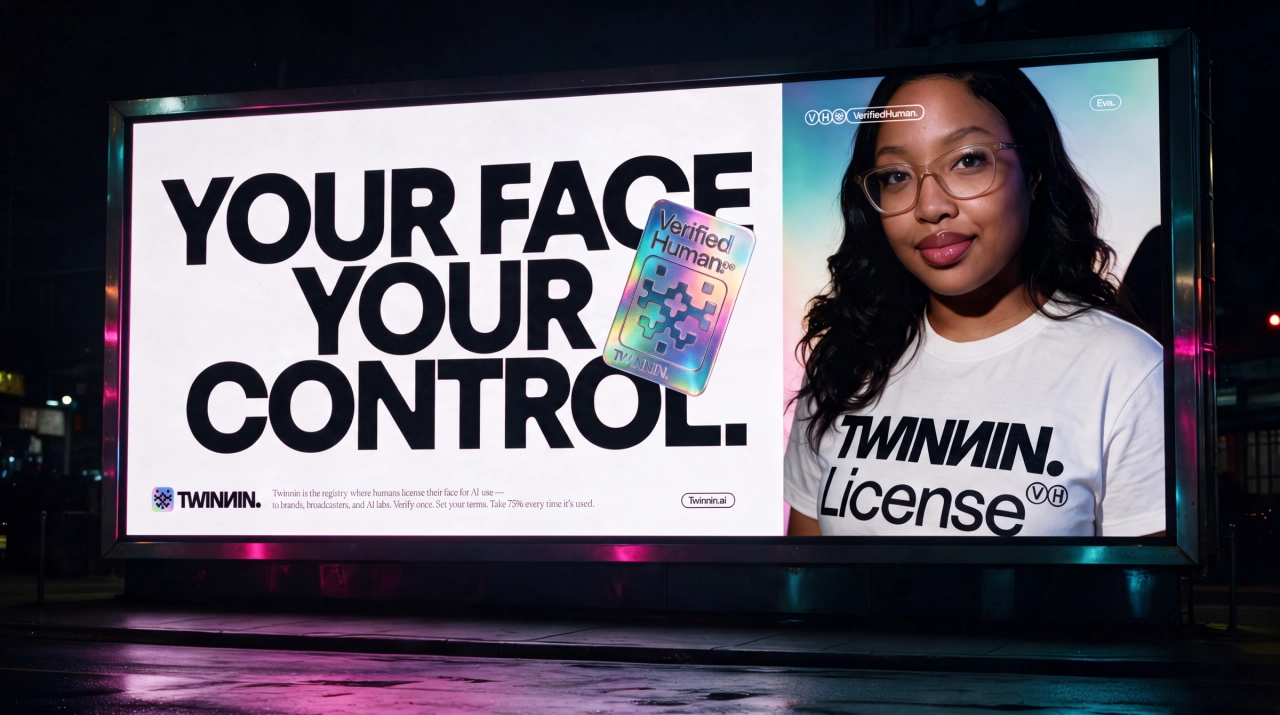
What's fascinating is that it isn't brand new. It's been around for a while. But, by its own admission, it needed a refresh to look more grown-up and reach beyond the initial focus on celebs and actors, keen to protect their careers. It approached Brighton brand agency and B Corp UnitedUs with a clear brief – to show that Twinnin is a registry for everyone. It also needed a mark that told people visually that a real human had given full consent.
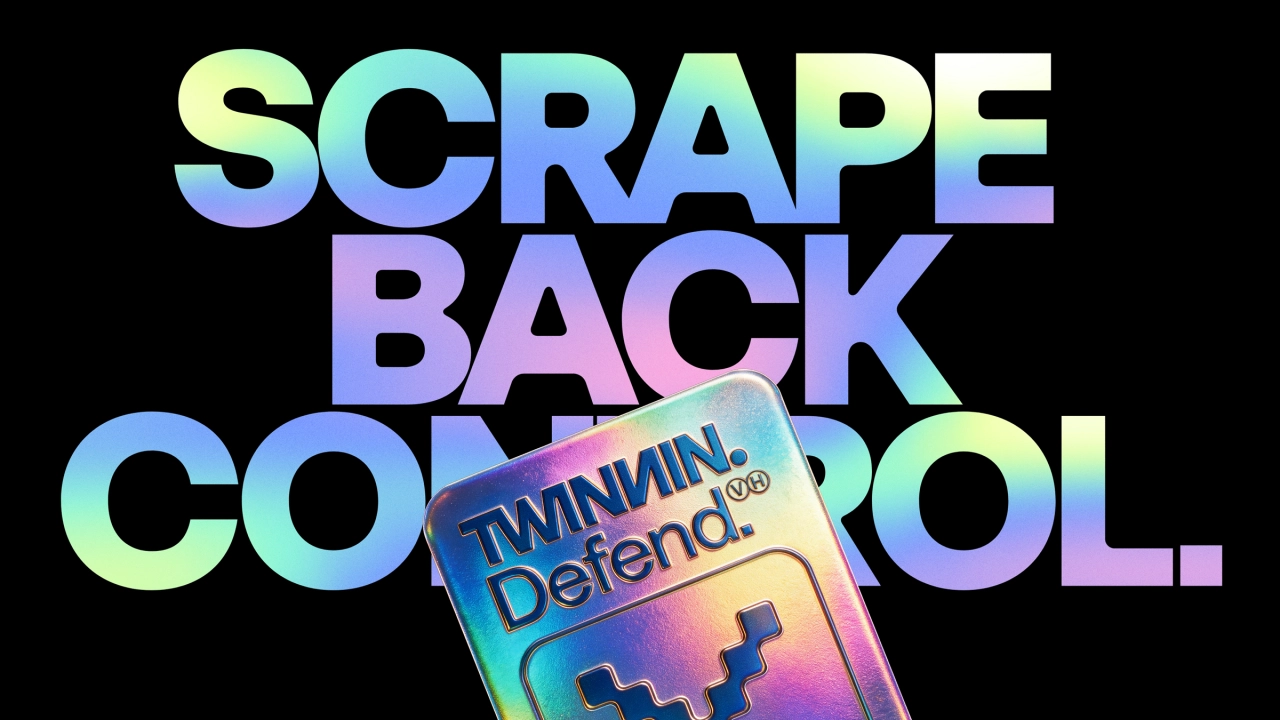
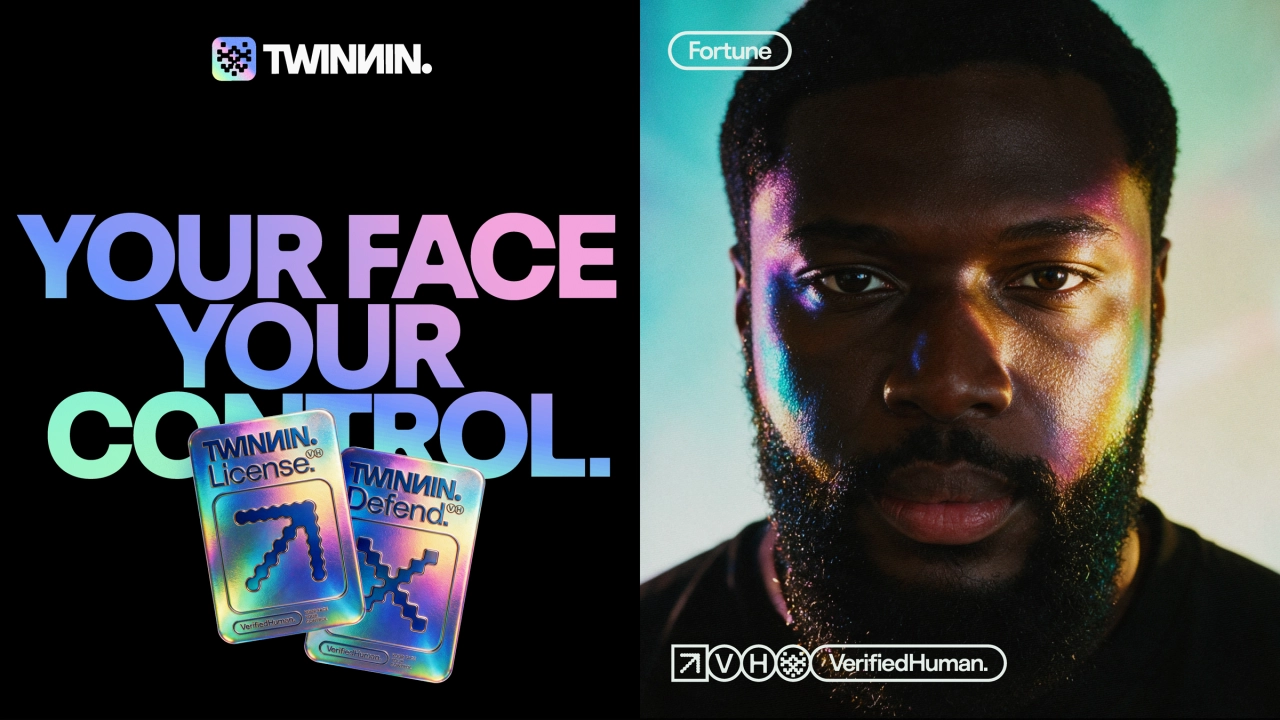
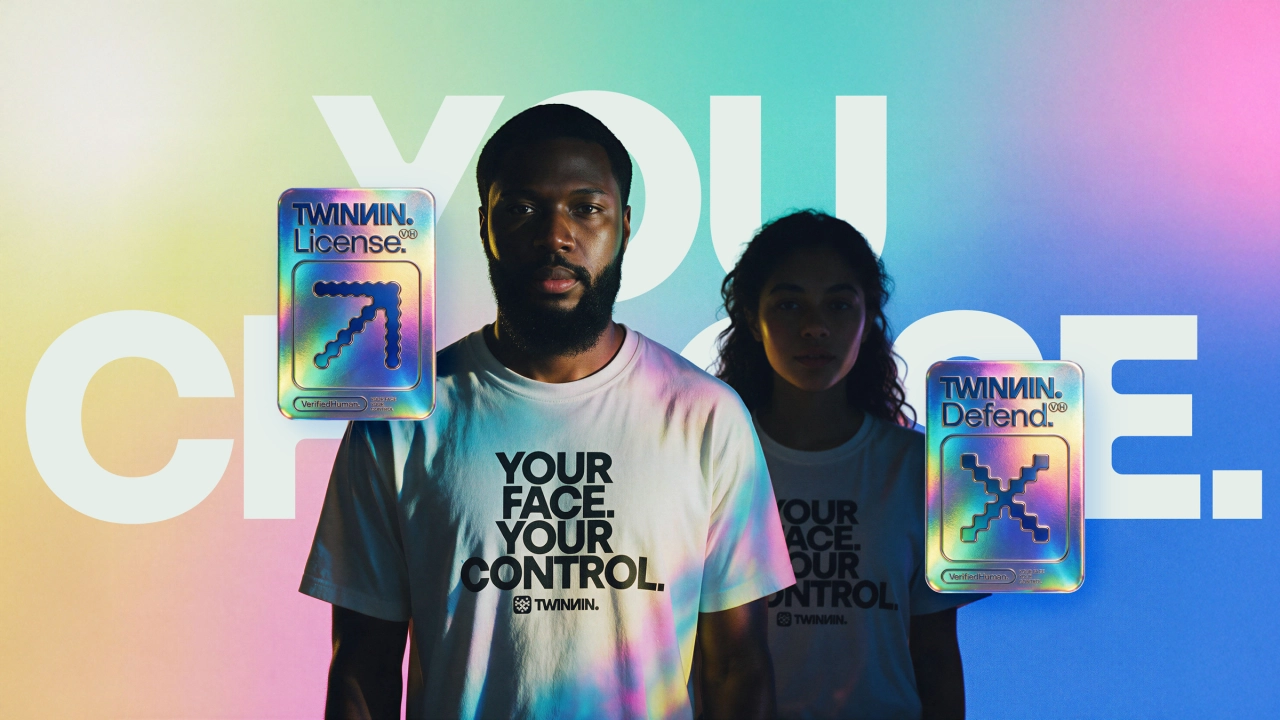
UnitedUs's solution was to boil the whole thing down to four words: "Your face. Your control." It makes sense to anyone. It doesn't try to be clever. You understand that every person on Twinnin is verified first, then picks a side. Either you choose Licence and get paid, or Defend and stay out. Those two choices become the system's two trust markers. And they're presented in shimmering hues as three-dimensional badges that make your decision clear as day.
The logo is where things get clever. It's built from the technical coordinates of a human face. You know, the sort of mapping points facial-recognition software uses. And it's finished off in holographic tints that you might see on security labels from DVDs or game cartridges. It instantly makes your brain associate it with security and protection, doesn't it? Holograms, after all, are hard to fake, so you know what you're looking at is the real deal.
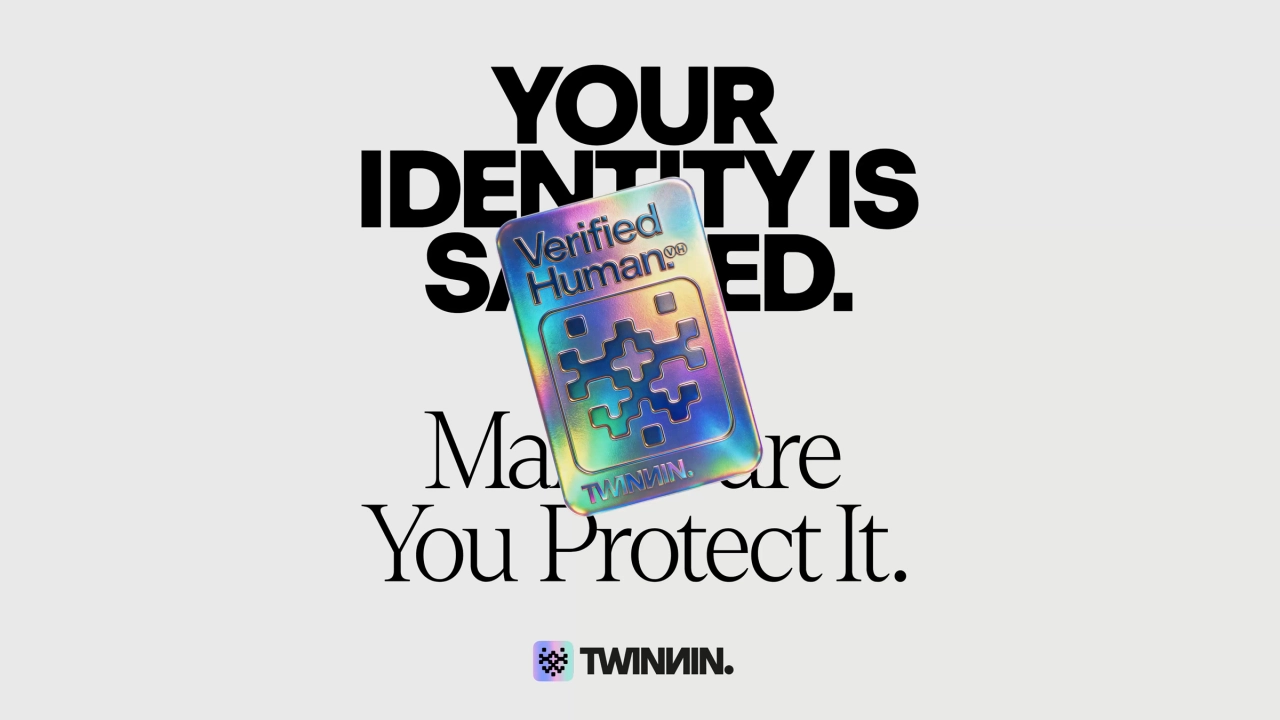
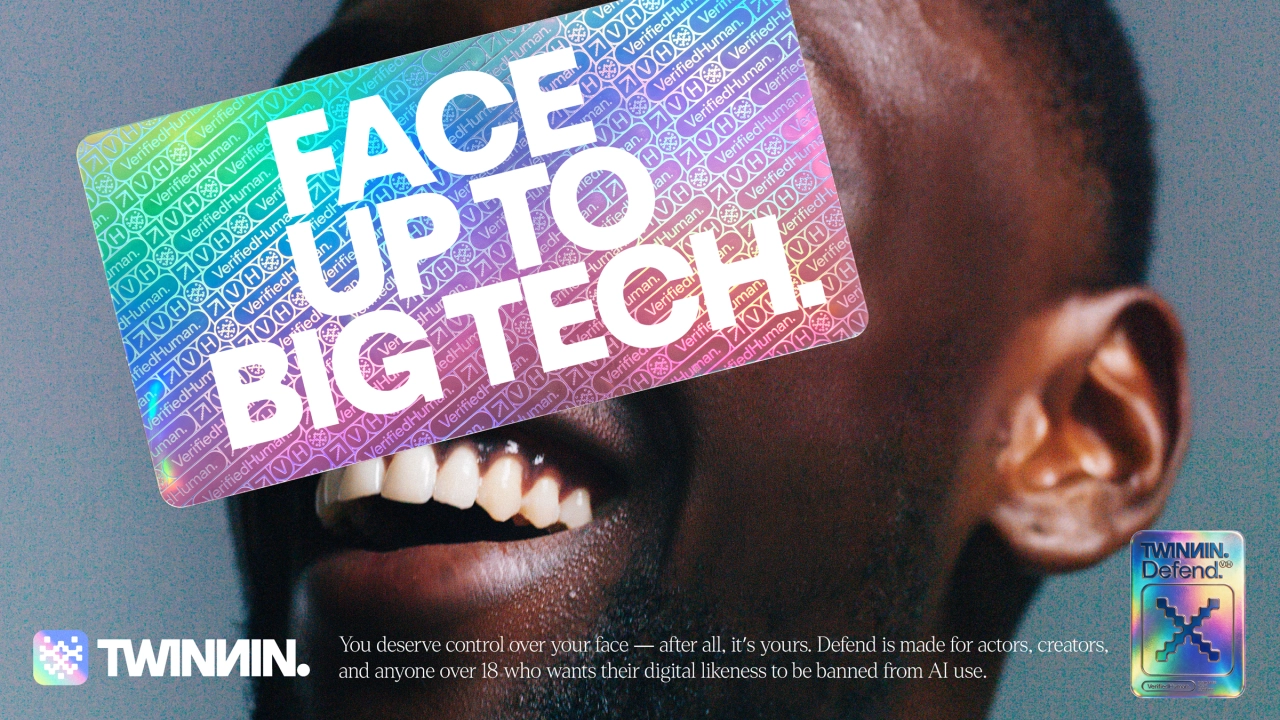
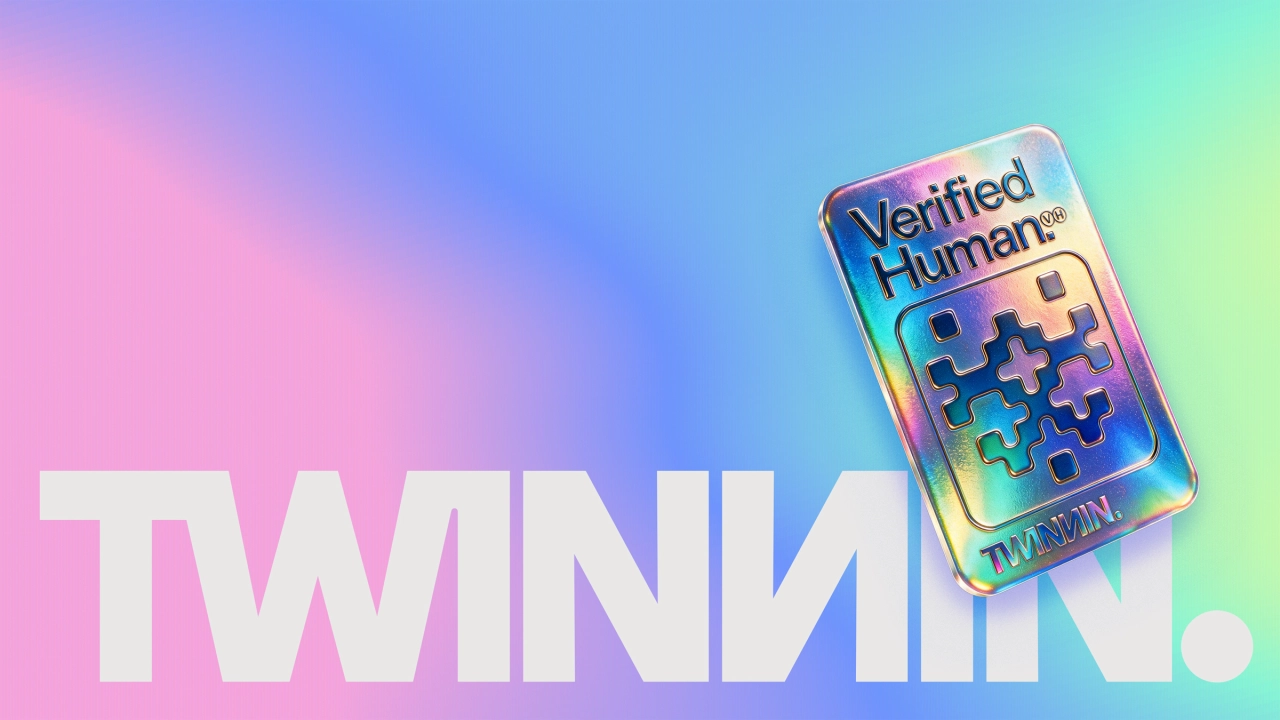
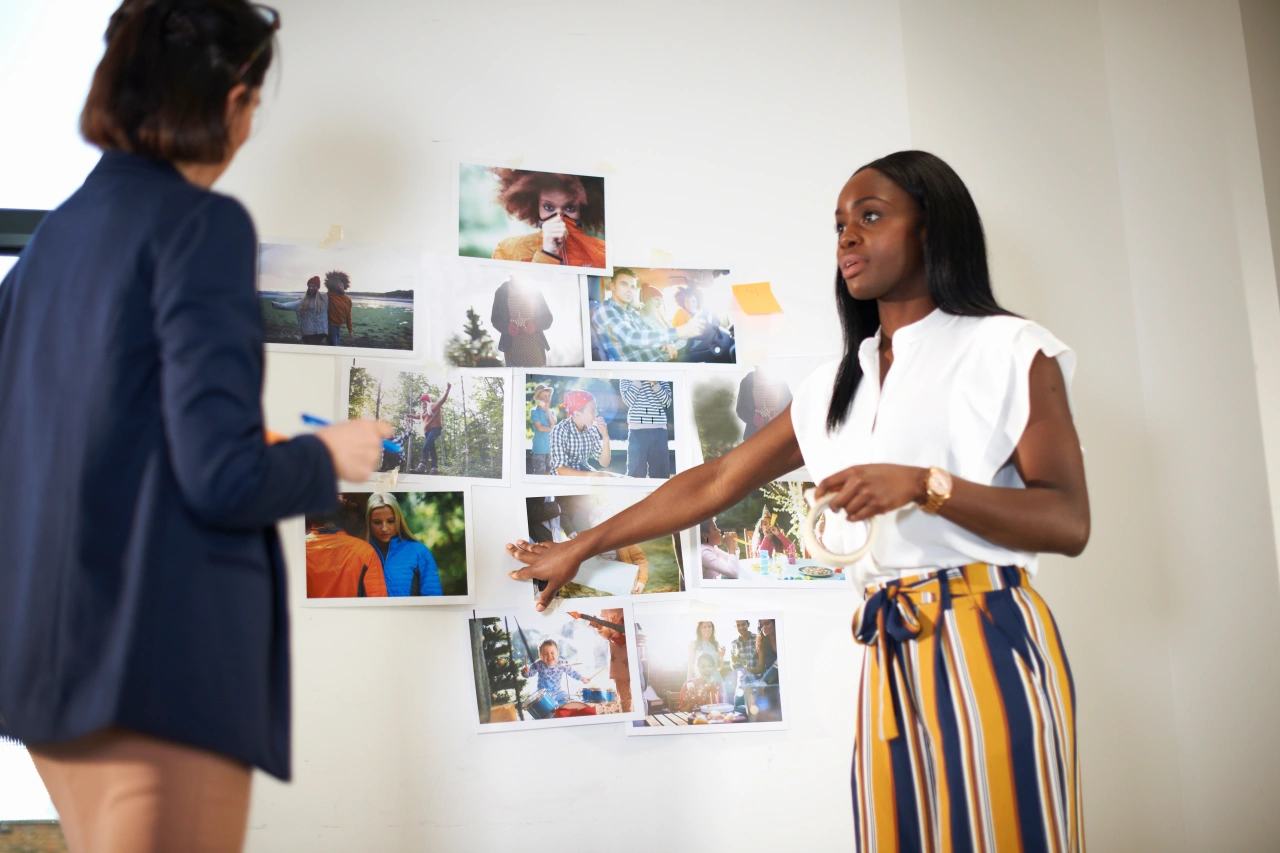
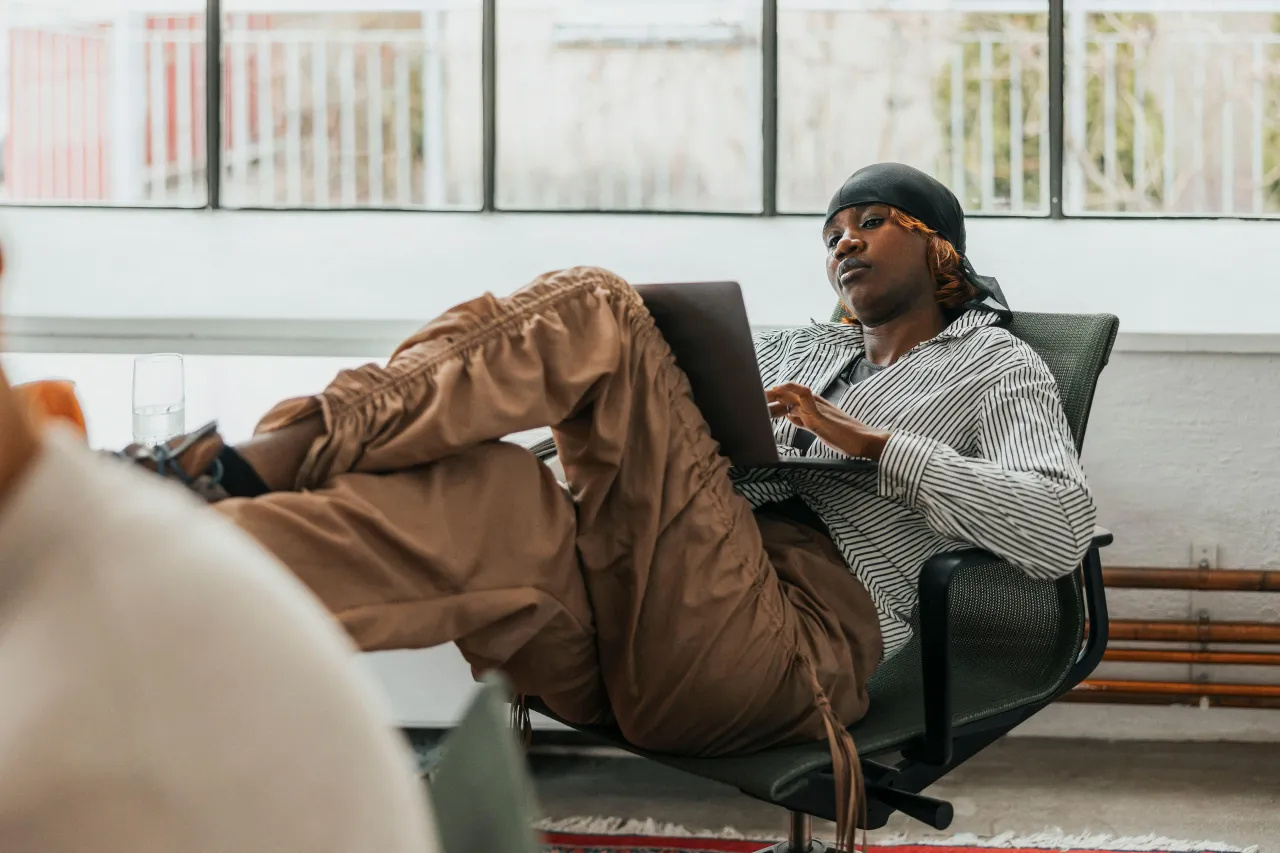
The accompanying imagery shows verified people throughout. They're all verified humans registered on the Twinnin platform. A nice touch given this is the whole mission. The tone of voice, meanwhile, speaks right at "you" and it's defiant and confident with a dash of playfulness. Hey, we don't want to terrify people. The register wants to feel optimistic rather than patronising or frightening. It's a refreshing approach. It treats us as people with options rather than potential victims.
Back to the Verified Human mark, the heart of the entire system, it's designed to sit anywhere. It could show up on your own website or profile. And its job is clear – it tells everyone that a real person is behind a piece of AI content and that they said yes. Companies that use likenesses ethically and with consent get to use it too. The first to do so is Model Management, which has opened Twinnin up to its own network of more than three million models through an exclusive agreement.
But that's the Licence side of things, which Twinnin was founded on. After some time, a question kept coming up that bugged the founders: what if you don't want your face anywhere near AI, thank you very much? Twinnin developed what it calls Defend. You verify your identity and your social handles, then sign a dated declaration form objecting to a list of uses, including AI training, synthetic media and automated profiling. It's time-stamped on a public blockchain; you get a shareable verification link and badge, and if you spot suspected misuse, you can report it online and follow every takedown from your dashboard.
Twinnin popped into my inbox at a moment when the problem is getting worse, not better. Identity firm Entrust recorded a 3,000% rise in deepfake attempts between 2022 and 2023. Lord knows how bad it is now.
"SAG-AFTRA set the rule for Hollywood: no consent, no replica, and no replica without pay," says Katrien, who previously spent time as head of brand for Vodafone. "Everyone else is still dealing with scraped faces and fine print. Twinnin gives every performer, union card or not, the deal Hollywood fought for."
"Our likeness is deeply personal," adds Luke Taylor, UnitedUs's co-founder and creative partner, who now also sits on Twinnin's board as an executive advisor. "That made creating Twinnin's brand identity a particularly meaningful challenge for us to deliver upon.
"As AI becomes part of everyday life, people need greater control over how their likeness is used. We wanted to make that choice clear and empowering, whether someone chooses to Licence their likeness or Defend it. The result is an identity designed to grow and evolve with the real people at the heart of Twinnin, with Verified Human as a clear signal of trust and consent."
If AI could clone my voice from a six-second clip from my podcast, and that was more than 18 months ago, what can it do now? I think I'll choose Defend and hope for the best.
Editor's Picks


Trending



Latest Jobs
Director, Brand at KQED
Full-time·San Francisco·$125,547 – $165,000
Verbal Identity Fellow at Interbrand
Full-time·New York·$30 per hour
Midweight Designer at Weboaf
Full-time·London·£32,000 – £40,000
Lead Product Designer at Monzo
Full-time·London·£90,000 – £120,000
Senior Technical SEO Specialist at VML/WPP Enterprise Solutions
Full-time·Amsterdam·€80,000 – €95,000
Executive Producer, Brand Creative at Mercury
Full-time·San Francisco·$189,400 – $236,700